Monastery Made: 7 Businesses Run by Monks and Nuns
Behind abbey walls across America, monks and nuns are building businesses that generate millions — and every dollar goes to prayer, not shareholders.
There are 16,463 businesses in the Discover Catholic Business directory. Only 12 are in the "monastic" category. But those 12 punch far above their weight in story, mission, and cultural impact.
These are not startups. They are enterprises born from centuries-old rules of life — ora et labora, pray and work — where the profit motive is not profit at all, but the sustaining of communities dedicated entirely to God.
Here are 7 of the most remarkable.
We profile Catholic-owned businesses every week — from monastery enterprises to family startups. Subscribe free and never miss one.
1. Mystic Monk Coffee — Clark, Wyoming

A former Wall Street stockbroker-turned-Carmelite-monk roasting coffee in the Rocky Mountains. That is not a pitch deck — that is the actual origin story of Mystic Monk Coffee.
Father Daniel Mary left the trading floor for a monk's habit, eventually founding a small Carmelite community in northern Wyoming. The monks rise before dawn for Matins, pray the Divine Office throughout the day, and roast coffee between the hours of silence. Their Cowboy Blend and Royal Rum Pecan have built a nationally known brand — all to fund their audacious project: constructing a Gothic monastery meant to stand for centuries.
No marketing department. No venture capital. Just monks, beans, and the Rockies.
Find Mystic Monk Coffee on DCB →
2. Gethsemani Farms — Trappist, Kentucky
The Abbey of Gethsemani is one of the most famous monasteries in America — Thomas Merton lived and wrote here. The Trappist monks have been producing food items since the mid-20th century, and Gethsemani Farms is how they share their goods with the world.
Their product line includes bourbon fudge (this is Kentucky, after all), fruitcakes that have earned a devoted following, and cheese. Every purchase supports the monks' contemplative life at an abbey that has been in continuous operation since 1848 — 178 years of unbroken prayer.
Find Gethsemani Farms on DCB →
3. Trappist Caskets — Peosta, Iowa
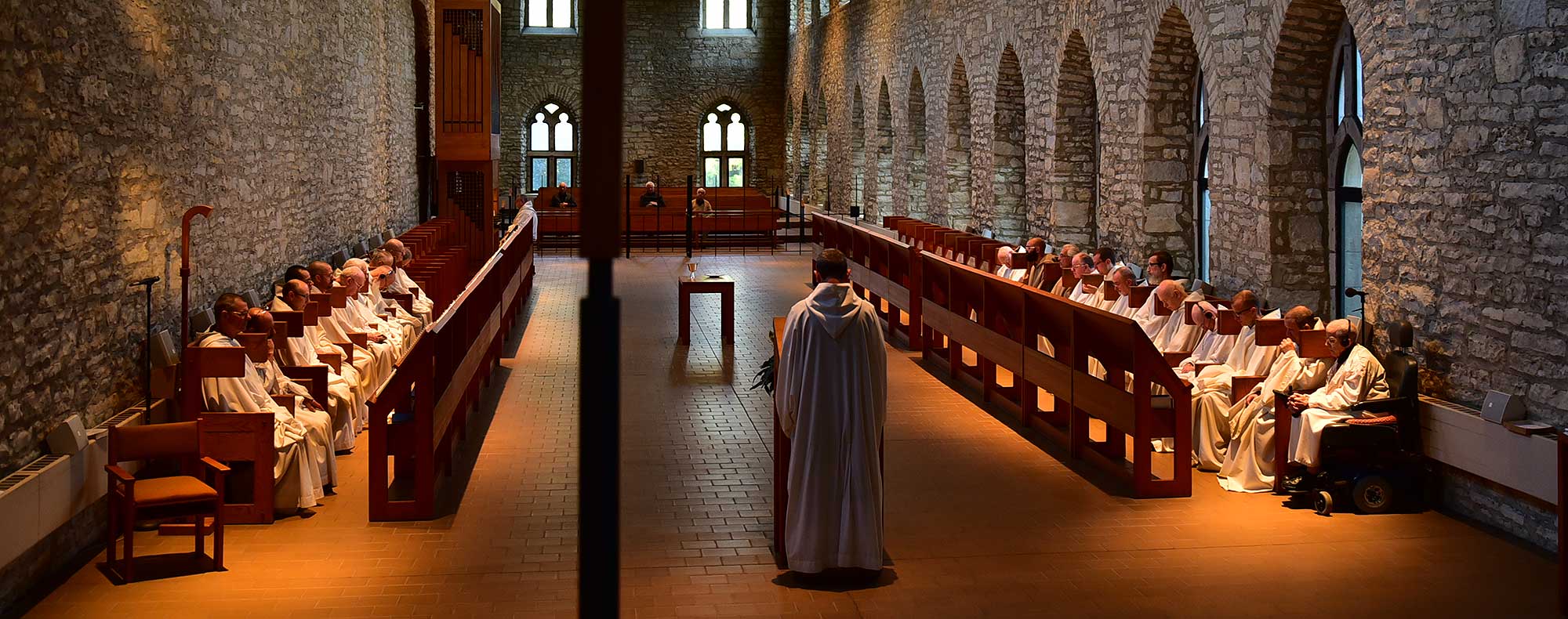
This one stops people mid-scroll. Yes, monks make caskets.
The monks of New Melleray Abbey in Peosta, Iowa, handcraft wooden caskets from sustainably harvested timber on their own 3,400-acre property. Each casket is built in the abbey workshop by monks who see the work as a final act of care for the deceased — a bridge between this life and the next.
In an industry dominated by mass-produced metal caskets and corporate funeral chains, Trappist Caskets offers something genuinely different: a handmade vessel built with prayer, from wood grown on monastic land, by men who have dedicated their lives to preparing for eternity.
Find Trappist Caskets on DCB →
This is the kind of article people forward. If you know a Catholic who'd appreciate these stories, share it with them — it takes 10 seconds and it helps us grow.
4. Trappist Preserves — Spencer, Massachusetts
The monks of Saint Joseph's Abbey started Trappist Preserves almost by accident. In 1954, a batch of mint jelly sold out at the abbey gift shop. The monks took notice.
Seven decades later, Trappist Preserves is one of the most recognized monastic brands in America. Their jams, jellies, and preserves are made on-site at the abbey in small batches. The flavors rotate with the seasons, and the quality has earned them shelf space in specialty food stores nationwide.
What makes this operation remarkable is its scale relative to its setting. This is a fully functioning monastery — the monks' primary vocation is prayer, not production. Yet they have built a food brand that competes with commercial producers while maintaining the rhythms of monastic life.
Find Trappist Preserves on DCB →
5. Monks' Bread (Abbey of the Genesee) — Piffard, New York

The Abbey of the Genesee is a community of Cistercian monks in western New York's Genesee Valley. Their bread operation — Monks' Bread — has been a staple in northeastern grocery stores for decades.
The monks bake multiple varieties, from whole wheat to raisin cinnamon, in their abbey bakery. The bread is sold commercially, but the operation retains its monastic character. The monks who bake are the same monks who chant the psalms at 2 AM. The ovens sit within earshot of the chapel.
Monks' Bread is proof that monastic enterprise does not have to mean small-batch artisanal products sold only online. It can mean bread, on grocery shelves, feeding families — all produced by men whose primary occupation is the worship of God.
6. Benedictine Brewery at Mount Angel Abbey — St. Benedict, Oregon
The monks of Mount Angel Abbey may be the only brewers in America whose beer receives a priestly blessing at every stage of production.
Benedictine Brewery operates on the grounds of the abbey in St. Benedict, Oregon, continuing a tradition that stretches back to the earliest days of Western monasticism. (Monks, after all, are widely credited with perfecting European brewing techniques in the Middle Ages.) The beers are crafted in the spirit of that centuries-old tradition — not as a novelty, but as a living continuation of monastic craft.
The brewery serves as a gathering point for the local community and visitors to the abbey, connecting the monks' contemplative life with the world outside the cloister walls.
Find Benedictine Brewery on DCB →
7. The Winery at Holy Cross Abbey — Canon City, Colorado
In the foothills of the Rocky Mountains, on the grounds of Holy Cross Abbey in Canon City, Colorado, a winery has been producing Colorado wines since 2002.
The setting is as dramatic as the product: abbey grounds backed by mountain views, a tasting room where visitors can sample wines produced from grapes grown in Colorado's high-altitude vineyards. The winery serves as both a revenue source for the abbey and a bridge between the monastic community and the public.
Holy Cross Abbey's winery proves that monastic enterprise is not stuck in the past. It adapts, it experiments, it meets people where they are — which, in Colorado, is often with a glass of wine and a view of the mountains.
Find The Winery at Holy Cross Abbey on DCB →
The Common Thread
These 7 businesses span coffee, food, beer, wine, bread, preserves, and caskets. They operate in Wyoming, Kentucky, Iowa, Massachusetts, New York, Oregon, and Colorado. Their revenues range from modest to millions.
But they share one thing that no secular competitor can replicate: every dollar goes to sustaining a community of people whose full-time job is to pray.
There are no shareholders. No executive bonuses. No exit strategies. Just monks and nuns, making things with their hands, selling them to support a life of worship that has continued, unbroken, for centuries.
In a consumer economy built on planned obsolescence and quarterly returns, that is radical.
Paid subscribers make this work possible. Your $5/month funds the research, the directory, and the mission to connect Catholics with businesses that share their faith.
Browse all 12 monastic businesses — and 16,000+ more — on Discover Catholic Business →
Know a monastic business we should add to the directory? Reply to this email or submit it at discovercatholicbusiness.com.
Sources: Discover Catholic Business, Mystic Monk Coffee, Gethsemani Farms, Trappist Caskets, Trappist Preserves, Abbey of the Genesee, Mount Angel Abbey, Holy Cross Abbey Winery